
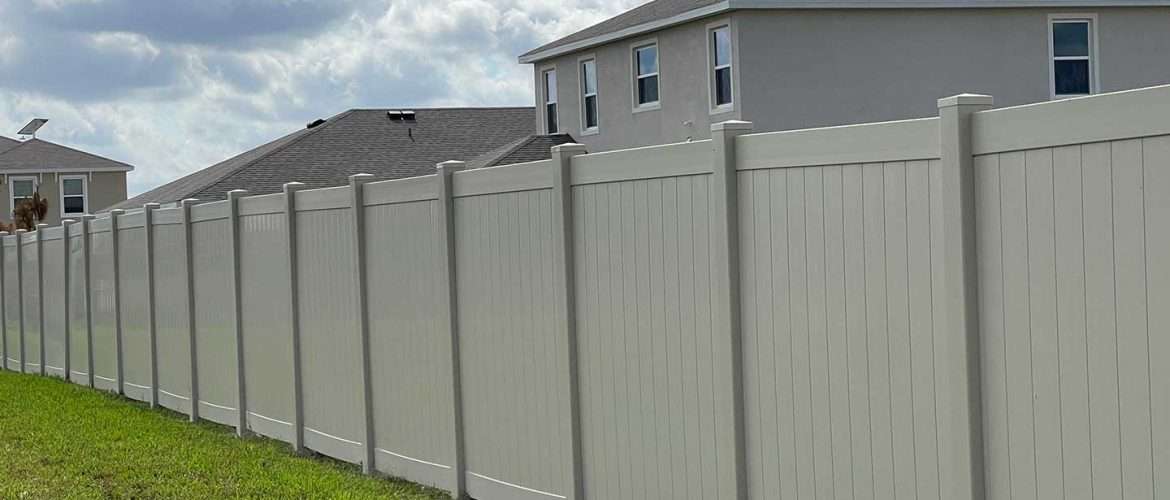
You’ve decided your property in Tampa needs a fence. Before you call a contractor or start shopping materials, there’s an important first step: figuring out whether your homeowner association has a say in the project, and, if so, what you need to do to get your fence approved.
Fortunately, the process of gaining HOA fence approval in Florida is fairly simple. Once you understand where to find your community’s rules, what HOAs typically regulate, and how the approval process works, you can move forward with confidence and avoid costly mistakes.
This guide walks you through everything Tampa and Central Florida homeowners need to know about navigating the HOA fence rules that Tampa communities enforce, getting architectural approval, and staying compliant with both your association and local building codes.

Figuring Out Your HOA Fence Rules
Not every Central Florida community operates under the same governance structure. Some neighborhoods are governed by a traditional homeowner association. Others fall under a Community Development District (CDD), which layers additional oversight on top of HOA rules. Still others rely solely on deed restrictions recorded at the time the subdivision was platted—enforceable by neighbors or the developer, but without an active HOA board.
Start by confirming which type of governance applies to your property. Your closing documents should list any HOA, CDD, or deed restriction disclosures. If you’ve misplaced those, check your county property appraiser’s website or your community’s online portal for copies of the Covenants, Conditions & Restrictions (CC&Rs) and Architectural Review Committee (ARC) guidelines.
Florida homeowner associations operate under Florida Statute 720 (the Homeowners Association Act), which grants HOAs the authority to regulate aesthetics and architectural features, including fences. However, the law also prohibits associations from unreasonably restricting fences in ways that conflict with a homeowner’s right to use their property. That balance means most Tampa communities can set standards for height, materials, and color, but they can’t ban fences outright without a legitimate reason tied to community design or safety.
One quirk worth noting: older deed-restricted neighborhoods in Hillsborough and Pinellas counties sometimes carry stricter fence language than newer master-planned communities. If your subdivision was platted in the 1980s or earlier, the rules won’t necessarily mirror what you see in newer developments.
What HOAs in Florida Typically Regulate for Fences
While every community’s CC&Rs are unique, most HOA fence guidelines in Central Florida and across the Tampa Bay region regulate the same core elements, which we’ve listed for you below.
Fence height
The standard is 4’ in front yards and 6’ in rear and side yards. Some communities cap all fences at 4′, particularly in neighborhoods with strict sight line aesthetics. Always confirm your community’s specific maximums before designing your layout.
Approved materials
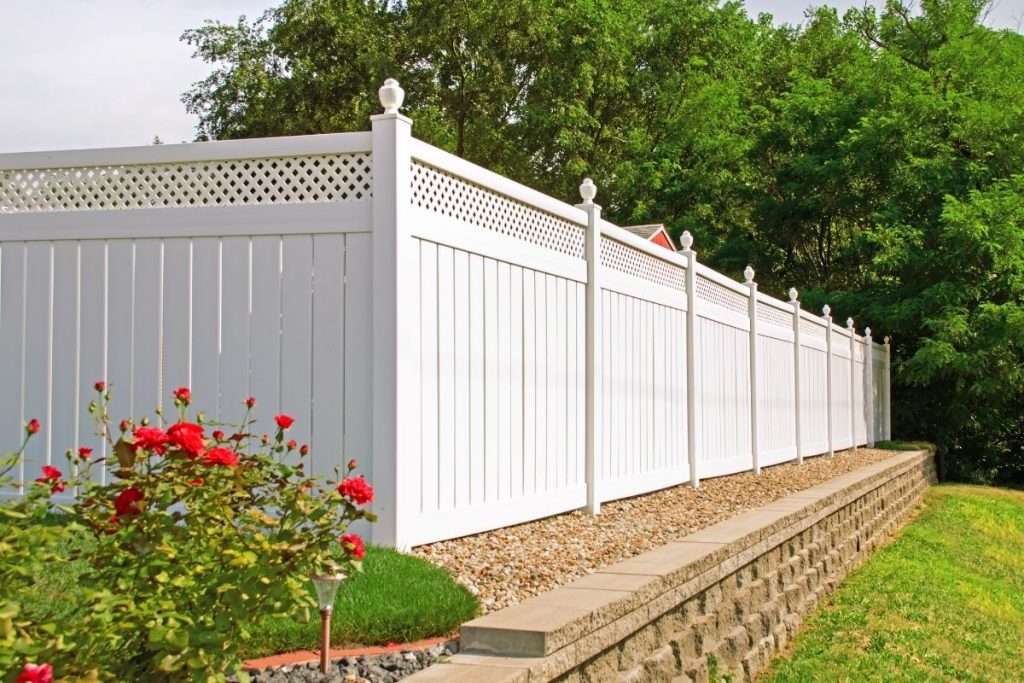
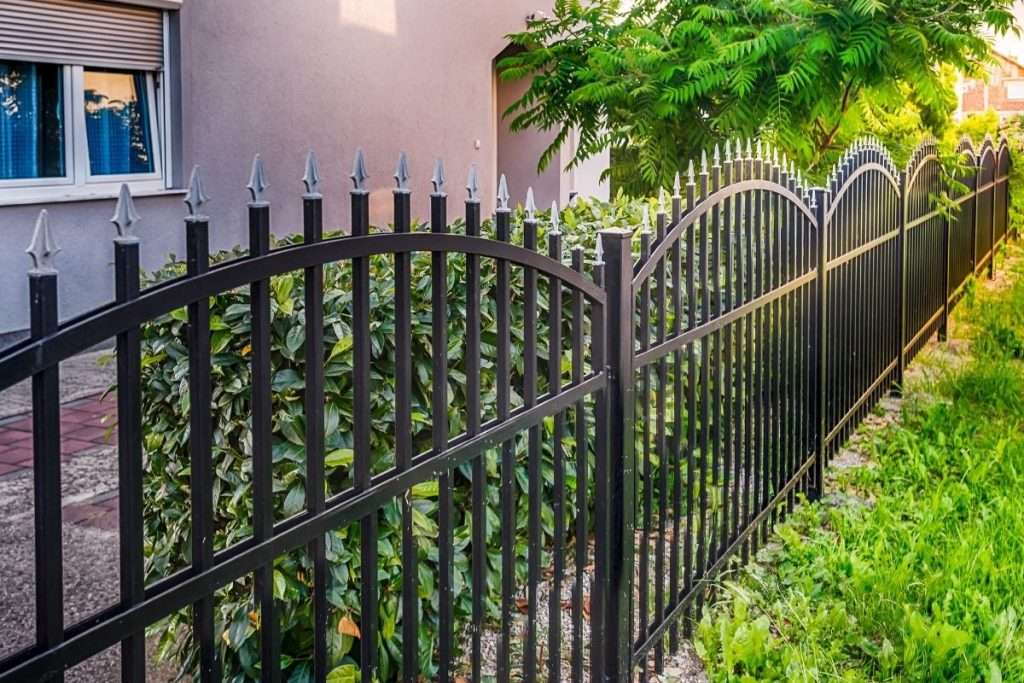
Vinyl and aluminum dominate the approved-materials lists in Central Florida HOAs. Wood fences are common but often require specific styles like shadowbox or board-on-board construction. Chain link is restricted or outright prohibited in many master-planned communities due to aesthetic standards. Barbed wire and electric fencing are almost universally banned in residential associations.
Color and finish
Many HOAs specify white or earth tones for vinyl fencing, and black or bronze powder-coated finishes for aluminum. Even if your preferred color seems neutral, double-check whether it appears on your ARC’s approved palette.
Sight line rules
If your property sits on a corner lot, expect stricter height restrictions within a defined sight triangle near the intersection. These rules exist to preserve driver visibility and are often written into both HOA guidelines and county ordinances.
Pool fencing
Florida law mandates pool barriers regardless of the HOA fence rules Tampa associations enforce. Florida Building Code Section 454.2.17 sets minimum height, gate latch, and spacing requirements for any pool barrier. Your HOA’s aesthetic standards still apply on top of those code minimums—your pool fence must satisfy both the building inspector and your architectural review committee.
Setbacks
HOA setback requirements often exceed what Hillsborough, Pinellas, or Marion counties mandate. Your fence might be legally compliant with the county but still violate your association’s CC&Rs if it’s placed too close to the property line or encroaches on a utility easement.
| Tip Box: Even if your HOA’s CC&Rs appear to allow your proposed fence, always submit for architectural approval before ordering materials or scheduling a contractor. Verbal permission from a board member is not binding, and assumptions can lead to expensive reinstalls. |
HOA Fence Approval Process
Knowing how to get HOA approval for a fence comes down to following a structured process. Most Tampa Bay associations use a similar workflow, though specifics vary by community. Here’s the step-by-step:
1. Pull your governing documents. Locate your CC&Rs and Architectural Review Committee guidelines. These documents define what’s allowed, what requires approval, and how to submit your application. If your community uses an online portal, log in and download the current ARC packet; guidelines sometimes change, and you want the latest version.
2. Draft your fence plan. You’ll typically need a site or plot survey showing the proposed fence line, fence height, material specification, color or style details, and gate placement. Some HOAs also require photos of neighboring properties or a written explanation of why you’re requesting the fence.
3. Complete the ARC application. Most Tampa-area HOAs provide an online submission portal or a PDF form. Some communities require a neighbor notification step, where you inform adjacent property owners of your plans before the ARC will review your request.
4. Submit and wait. Florida law (Chapter 720.3035) requires HOAs to act on architectural applications within 45 days, or the request is deemed approved by default. Many associations move faster, especially in larger master-planned communities with dedicated property management staff.
5. Receive written approval. Do not order materials, schedule contractors, or pull permits until you have written approval in hand. Email confirmations from the ARC or property manager count. A conversation at the mailbox with a board member does not.
6. Pull your county permit. HOA approval and county permitting are separate processes. You typically need both. Hillsborough, Pinellas, and Marion counties each have their own fencing permit requirements, and some exemptions apply based on height and location. Your contractor can usually handle this step if you’re working with a licensed fence company.
7. Schedule your install. Once approvals and permits are in place, your contractor can begin work. Stick to the approved plan; changes mid-project may require a new ARC submission.
8. Final inspection and HOA sign-off. Some communities require a post-install inspection by the ARC before the project is formally closed. Confirm whether your association has this requirement so you’re not caught off guard after the fence goes up.
Common Reasons HOA Fence Applications Get Rejected
Even well-intentioned applications get denied. Understanding the most common pitfalls can save you weeks of delay and help you submit a clean application the first time. Here are the common reasons applications are rejected:
- Wrong material or color not specified in the CC&Rs: If your community’s guidelines explicitly list approved materials and you’ve chosen something outside that list, expect a rejection. The same applies to colors that fall outside the approved palette.
- Fence line extends past the property boundary: If your proposed fence encroaches even slightly onto a neighbor’s lot, an easement, or HOA common area, the ARC will kick it back.
- Height exceeds community maximum: A 6’ fence might be legal under county code, but if your HOA caps rear-yard fences at 5’, you’ll need to adjust your plan or request a variance.
- Missing or incomplete plot plan: If your application lacks a scaled drawing showing the fence location relative to property lines, structures, and setbacks, it won’t move forward.
- Skipped neighbor notification where required: Some HOAs mandate that you notify adjacent property owners and submit proof of that notification with your ARC application. Missing this step results in an automatic denial.
- Application submitted after work started: Installing a fence before receiving approval is one of the costliest mistakes a homeowner can make. You may be required to remove the entire installation at your own expense, even if the fence otherwise complies with community standards.
- Pool barrier doesn’t meet Florida Building Code minimums independent of HOA approval: If your proposed pool fence satisfies the ARC’s aesthetic preferences but fails to meet code height, latch, or spacing standards, the county inspector will flag it during the permit process.

Tampa Bay & Central Florida HOA Fencing
If you live in one of the region’s larger master-planned communities (Westchase, FishHawk Ranch, Watergrass, Connerton, or similar developments) expect detailed ARC guidelines and a formal review process managed by a professional property management company. These communities often maintain online portals with sample fence plans, approved vendor lists, and FAQ documents to streamline the process.
Ocala-area communities like On Top of the World, Fore Ranch, and Golden Ocala operate under their own ARC processes, which can be just as detailed as their Tampa Bay counterparts. If your Ocala-area property falls within a CDD, you may face a second layer of architectural review beyond the HOA.
Community Development Districts are common in Central Florida and add another approval step. CDDs have their own design standards and review boards, which work alongside HOA architectural committees. If you’re unsure whether your neighborhood includes a CDD, check your annual tax bill—CDD assessments appear as a separate line item.
Hurricane and wind rating requirements in Hillsborough, Pinellas, and Marion counties also affect what fences are allowed in HOA communities in Florida. Your fence materials and post installation specs must meet local wind zone standards, and some HOAs have adopted wind-rated language into their ARC standards to ensure compliance with Florida Building Code.
HOA Fence FAQs
Do I need HOA approval to replace an existing fence with the same material?
Most HOAs require architectural approval even for like-for-like replacements because any visible exterior change, including fence replacement, falls under the ARC’s scope. Submitting a replacement request is typically faster than a new fence application, but skipping the process can still result in fines or a removal order.
How long does HOA fence approval take in Florida?
Florida law requires HOAs to respond to architectural applications within 45 days, or the request is deemed approved. In practice, many Tampa Bay associations respond within two to three weeks, especially in communities with active property management. Delays often stem from incomplete applications or busy review cycles during peak construction seasons.
Can my HOA reject a fence required for pool safety?
No. Florida Building Code mandates pool barriers, and HOAs cannot override state safety requirements. However, your HOA can require that the pool fence meet specific aesthetic standards (such as height, color, material, and style) as long as those standards don’t conflict with code minimums. The fence must satisfy both the building inspector and your ARC.
Does a fence require a permit in Hillsborough County?
Hillsborough County requires permits for most residential fences over 6’ in height or located in flood zones. Fences under 6’ in standard residential zones may be exempt, but exemptions vary by location and fence type. Check with the county building department or have your contractor verify permit requirements before starting work.
What happens if I install a fence without HOA approval in Florida?
Without HOA fence approval in Florida, installation may violate your CC&Rs and can result in fines, a formal violation notice, and a demand to remove the fence at your expense. In some cases, the HOA may file a lien against your property or take legal action to enforce removal. Even if the fence complies with county codes, associations can enforce their architectural standards through the CC&Rs you agreed to when purchasing the property.
Can an HOA require me to remove a fence I already installed?
Yes. If you installed a fence without approval or in violation of your community’s CC&Rs, the HOA has the authority to require removal. Depending on your association’s enforcement process, you may receive a warning period to bring the fence into compliance or remove it voluntarily. Ignoring the violation can lead to fines, liens, or legal action.
What is the maximum fence height allowed in a Florida HOA?
There’s no universal maximum as fence height limits are set by individual HOA CC&Rs. Most Central Florida associations allow 6’ height in rear and side yards and 4’ height in front yards, but some communities cap all fences at 4’ or 5’. Always check your specific community’s guidelines before designing your fence layout.
Does my HOA govern fence height for a corner lot differently?
Yes, in most cases. Corner lots typically face stricter height restrictions within a defined sight triangle to preserve driver visibility at intersections. Your HOA’s ARC guidelines should specify sight line requirements, and county ordinances may impose additional restrictions. Confirm both before submitting your application.
Working with a Licensed Florida Fence Contractor
A licensed, local fence contractor familiar with Central Florida HOA requirements can prepare the documentation your ARC needs, pull the county permit, and help you choose materials that meet your community’s architectural standards. Navigating fence permits and HOAs in Tampa, FL, is easier when you’re working with a team that understands regional HOA norms, Florida Building Code, and county-specific permitting.
Florida State Fence serves homeowners throughout Central Florida from Tampa and Ocala office locations and can guide you from ARC application through final install. Whether you’re planning a pool safety barrier, a privacy fence for your backyard, or a decorative front-yard accent fence, we’ll help ensure your project meets both your HOA’s expectations and Florida’s building standards.Ready to get started? Request a free on-site estimate and ask about our flexible financing options to make your fence project more affordable.


